basic stories
Ceramics, plants & design

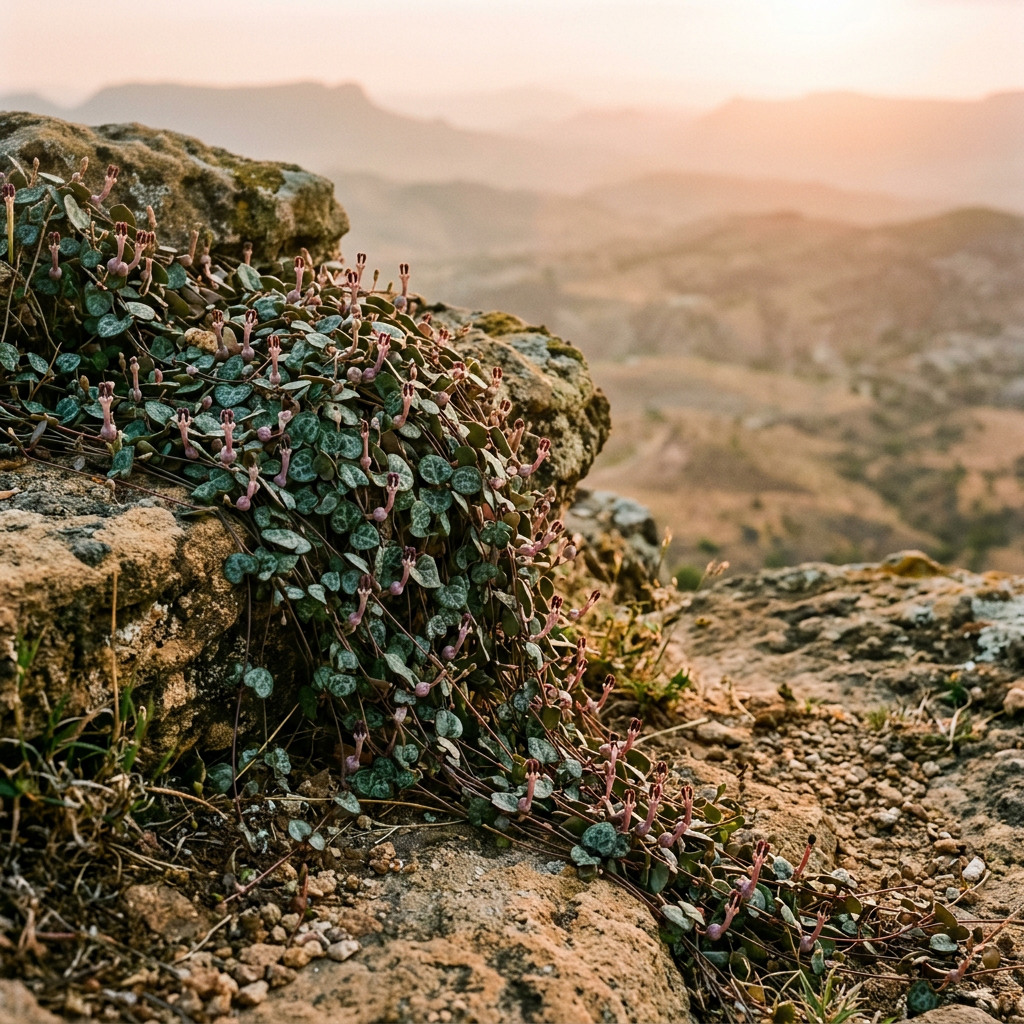
The Ceropegia woodii, popularly known as string of hearts, rosary of hearts or necklace of hearts, is a hanging plant of South African origin that has become one of the most sought after by indoor plant lovers.
Its delicate, heart-shaped leaves, grayish-green with a reddish underside and a silvery pattern on the surface, make it a unique and easily recognizable decorative piece.
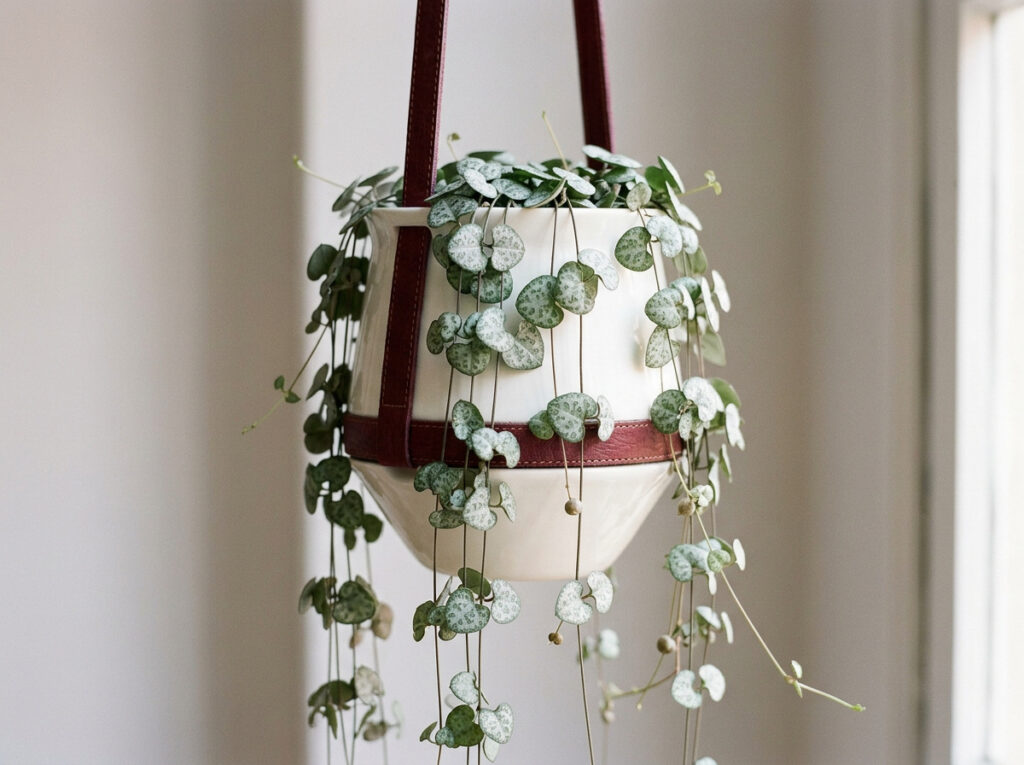
The Ceropegia woodii was first discovered in South Africa in the late 19th century. It belongs to the Apocynaceae family and is a climbing, trailing succulent plant native to Eswatini, Zimbabwe, and South Africa.
In its natural habitat, it grows among rocks and shrubs, which explains its high drought resistance and adaptation to poor, well-drained soils.
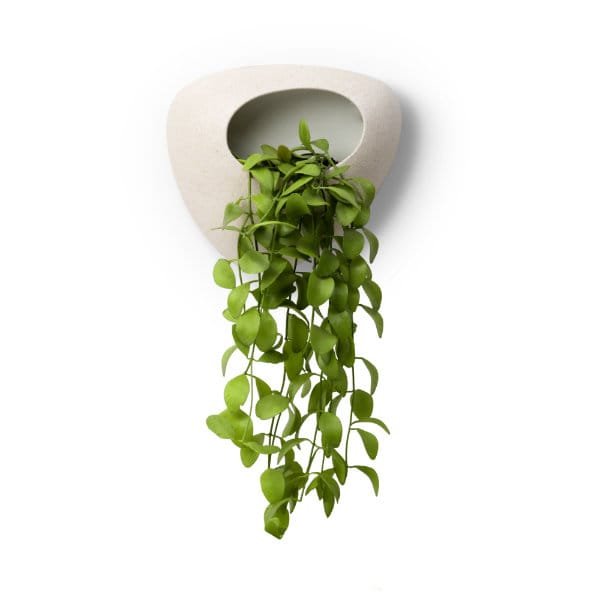
Their stems can reach over a meter in length, creating curtains of tiny hearts that fall elegantly from hanging pots.
Ceropegia woodii needs bright, indirect light to thrive. The best location is near an east- or west-facing window, where it receives several hours of light without direct midday sun, which can scorch its leaves.
In low light, the plant loses color intensity and the stems become more spaced out and weaker. Outdoors, it can tolerate some gentle direct sunlight, especially in the mornings.
The most common mistake with this plant is overwatering. The string of hearts plants stores water in their leaves and underground tuber, so they tolerate drought very well.
Watering should be done when the substrate is completely dry, which in summer can be every 7-10 days and in winter it can be spaced out to once a month or less.
It is essential that the pot has good drainage to avoid waterlogging, which causes root rot.
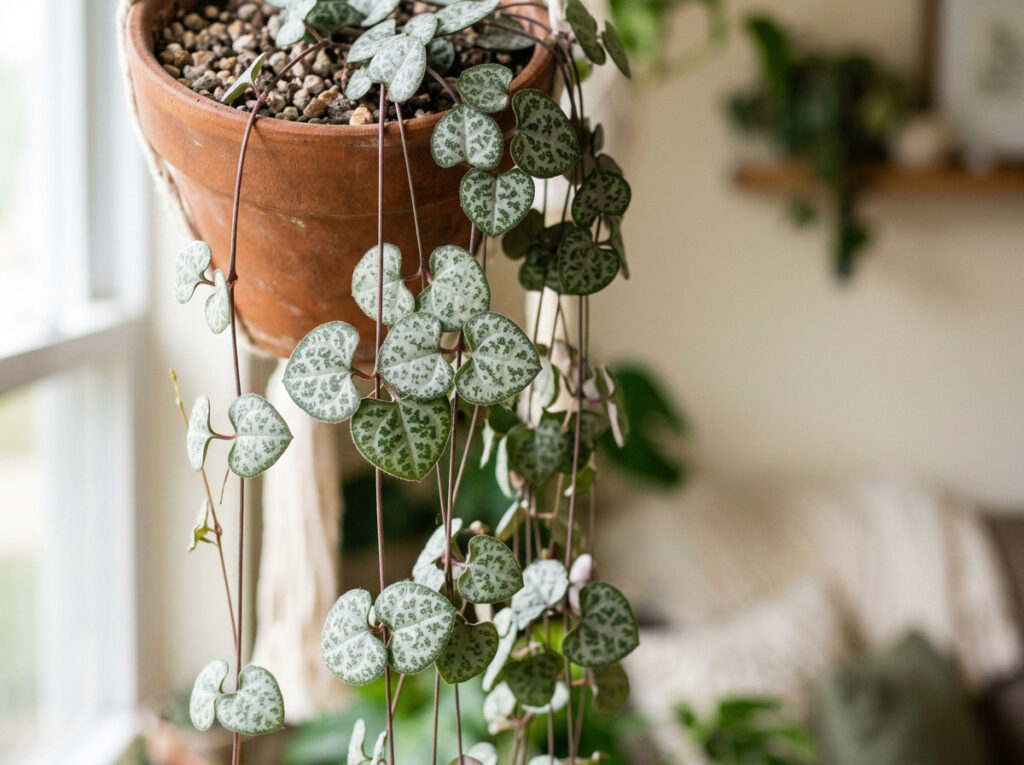
A porous and well-drained substrate is recommended for Ceropegia woodii.
You can use succulent or cactus soil directly, or mix universal substrate with perlite in a 1:1 ratio.
The pot should have drainage holes and not be excessively large; this plant prefers to be somewhat cramped in its container.
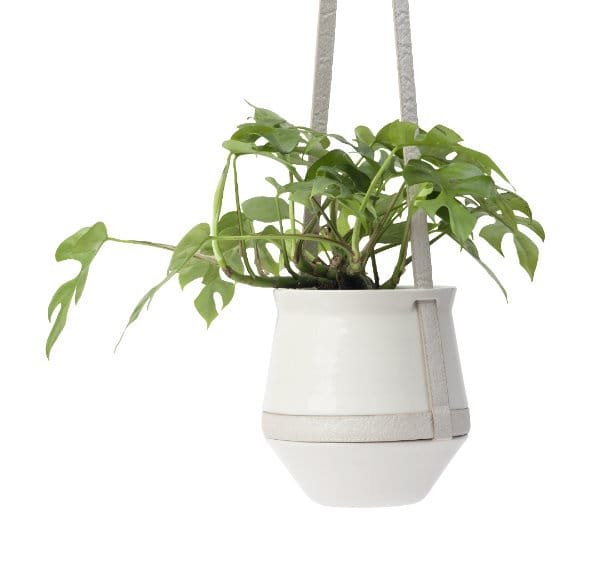
The Plantcloud hanging planter is ideal for this type of plant.
The String of hearts adapts well to typical household temperatures, between 15°C and 25°C.
It does not tolerate frost or prolonged exposure to temperatures below 10°C.
Regarding humidity, it does not need humid environments; on the contrary, it prefers dry or moderately humid air, making it perfect for heated indoor spaces.
During spring and summer, you can fertilize Ceropegia woodii once a month with a liquid fertilizer for succulents or cacti diluted to half strength. In autumn and winter, stop fertilizing completely, as the plant enters dormancy.

Ceropegia woodii is easily propagated by several methods:
Ceropegia woodii is hardy, but can be affected by mealybugs, especially if the environment is very dry.
The most serious problem, as with almost all succulents, is rot from overwatering. If the leaves wrinkle, it's a sign of lack of water; if they turn yellow and soft, there's too much moisture.
This plant produces tubular, vase- or lantern-shaped flowers in shades of pink and purple, which appear mainly in summer and autumn. It is named after the British botanist John Medley Wood, who first described it in the late 19th century.
The key is to provide bright light with some gentle direct sunlight, avoid overwatering, and maintain a temperature between 16 and 21°C. A well-draining substrate and allowing it to dry out between waterings are essential for success.
It is recommended to water when the substrate is dry to the touch, which usually occurs every 7-10 days depending on the humidity and temperature of the environment. In winter, the frequency should be reduced considerably.
Flowering occurs mainly between summer and autumn. During this time, small, lantern-shaped flowers appear, which are quite striking and characteristic of the species.
The most frequent problems are root rot due to overwatering and the appearance of pests such as mites and mealybugs. These are addressed by ensuring suitable growing conditions and using specific insecticides when necessary.
Cut a healthy stem, let it dry for a few hours, and plant it in fresh, well-draining soil. Keep it moist until it roots, a process that usually takes several weeks.
There are several species, such as Ceropegia sandersonii and Ceropegia linearis woodii, which are distinguished by the shape of their flowers and their growth habits. Some have parachute-like flowers, while the woodii is particularly notable for its heart-shaped leaves.